Standard Class Carriage
One of the newest carriages on the Bluebell Railway (1961), standard class open carriage carriages have an aisle in the centre and two pairs of 2-seaters either side, with no compartment divider. They are similar to first class in as much that they have deep spring units in both back and base, but lack centre armrests, piping or elaborate pattern design. This makes them easy to pattern-match at speed during construction, and therefore cheaper in labour costs when they were being constructed for operation by British Rail in period.
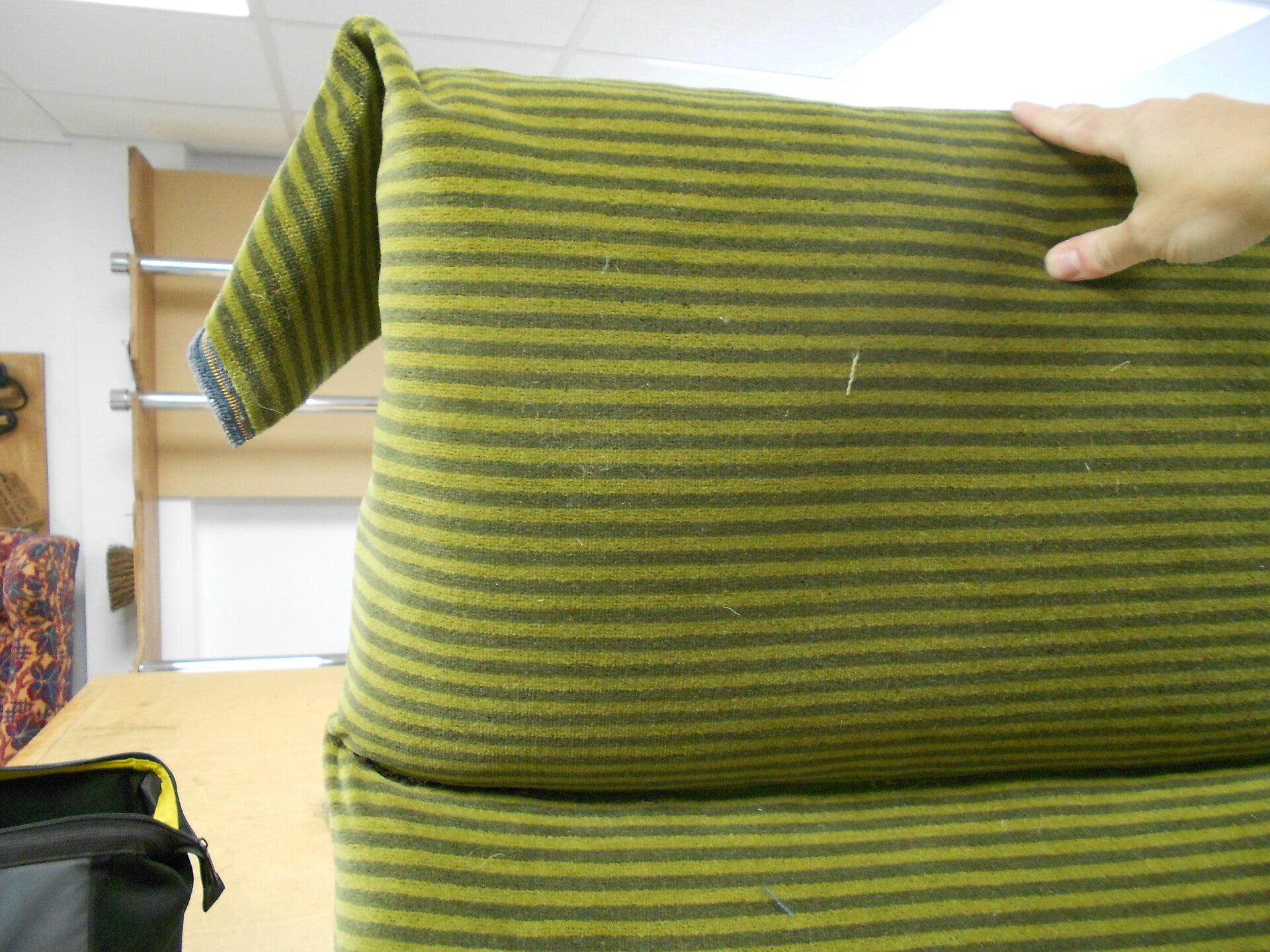
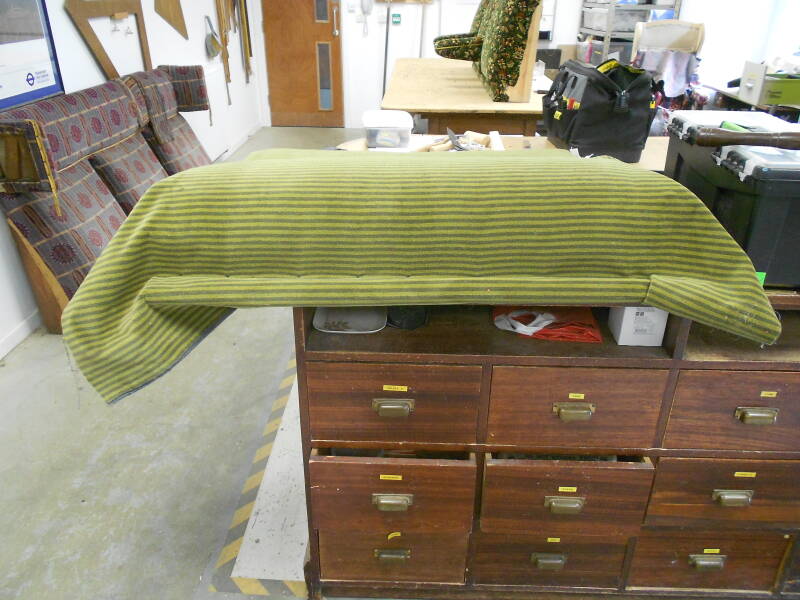
Seat back in mid-construction
The deep spring units provide a comfort that is absent from modern railway seating, in that the springs alone are wider than the frame plus foam of a modern carriage (for example the Thameslink 700 class or 377 Southern).
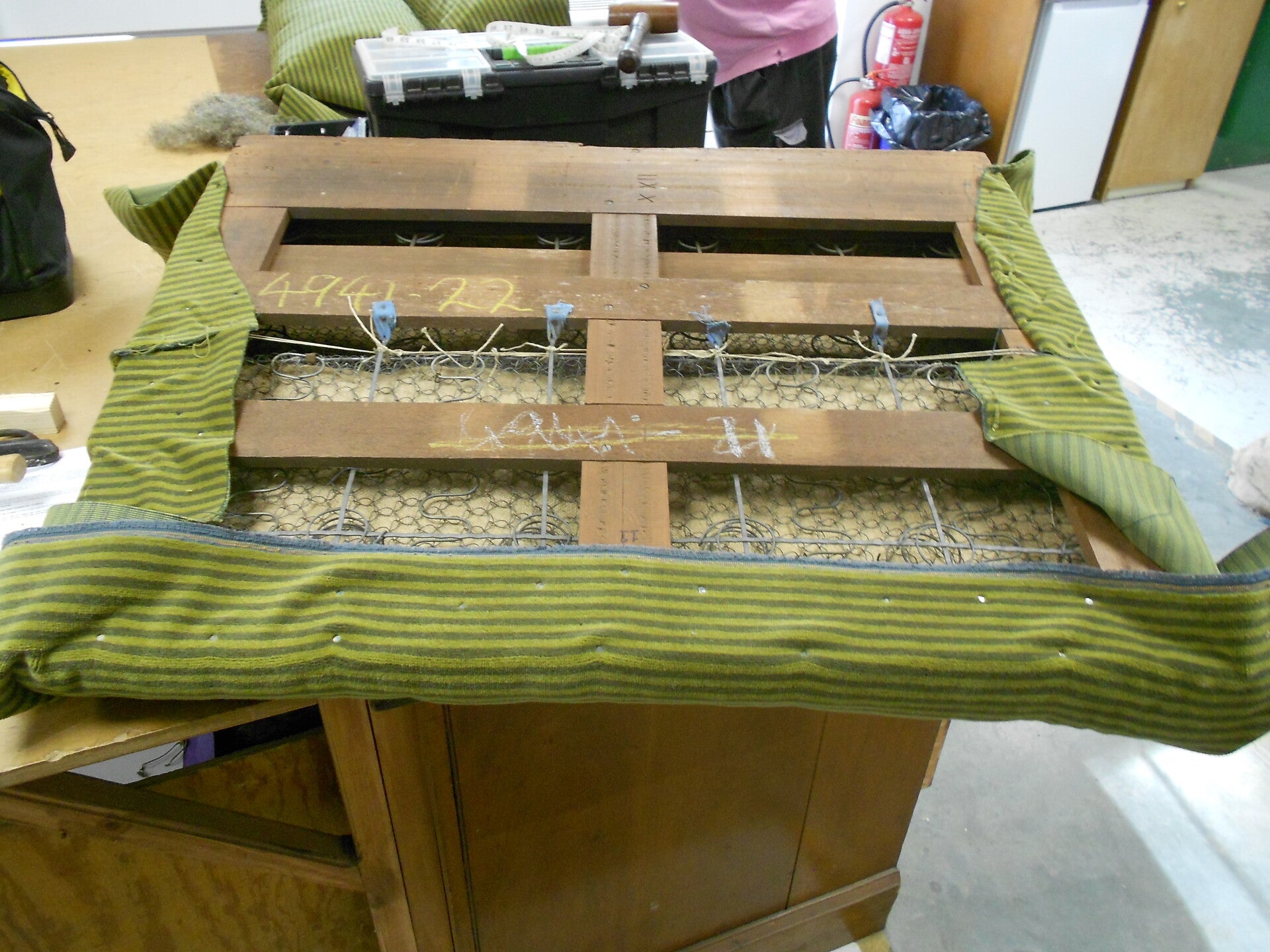
Inside the rear of the spring unit
The wooden frame is original to the carriage. At the other side of the springs, looking right through them in this photo, is the canvas which holds both the springs to the frame, and the hair strung to the front side of the canvas. Moquette is the top layer over the hair, in this photo temporarily tacked in position so it can stretch to form a tight feel and hold the hair firmly in place. From initial placement, moquette can stretch 3-4 inches over a frame this size.
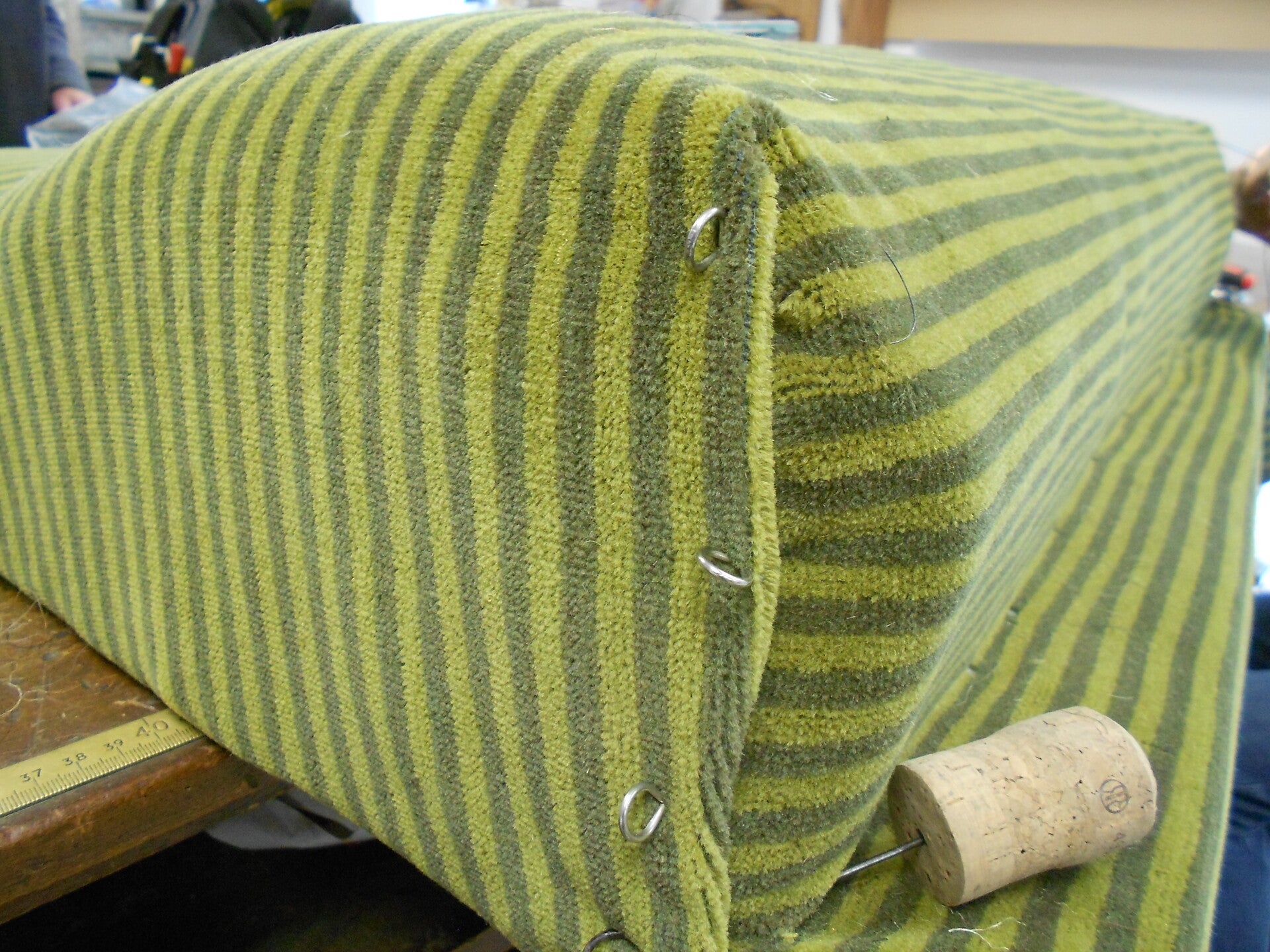
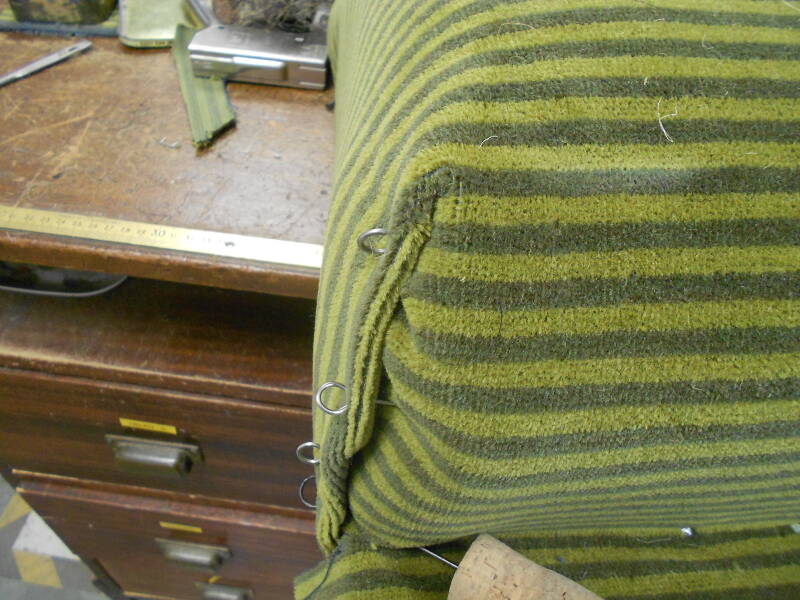
Finishing with 'Frenching'
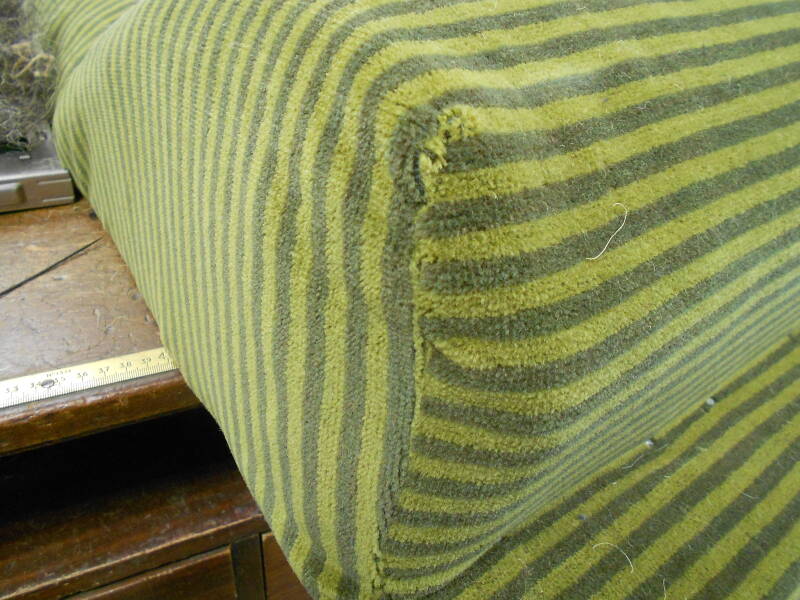
On the railway, the technique called Frenching is the hand-sewn finishing of the corners. Here we see a corner skewered into position ready for the Frenching to begin. Once finished, the stitches are invisible on the inside. The photos below show a summary of the full construction.
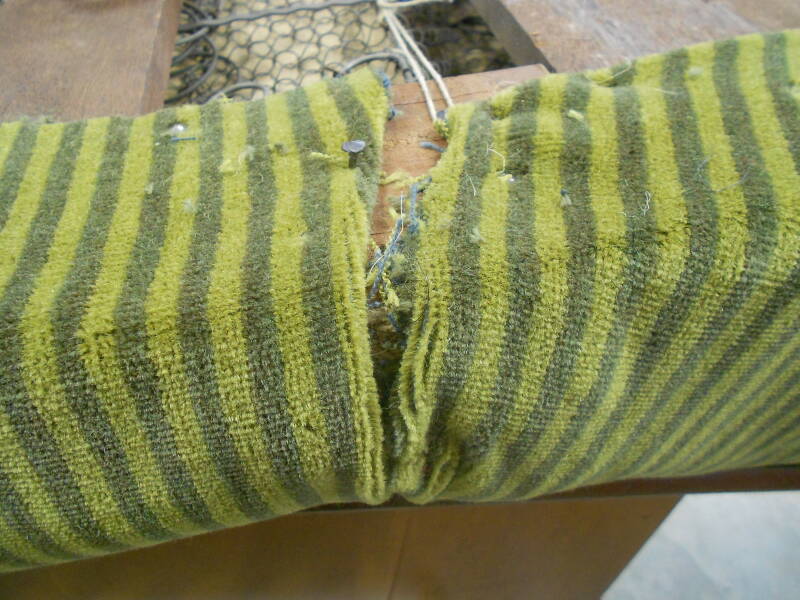
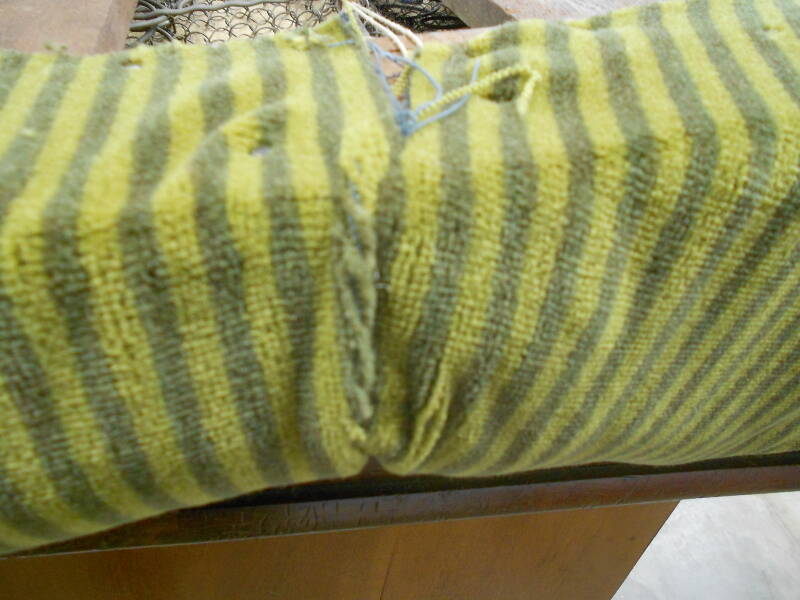
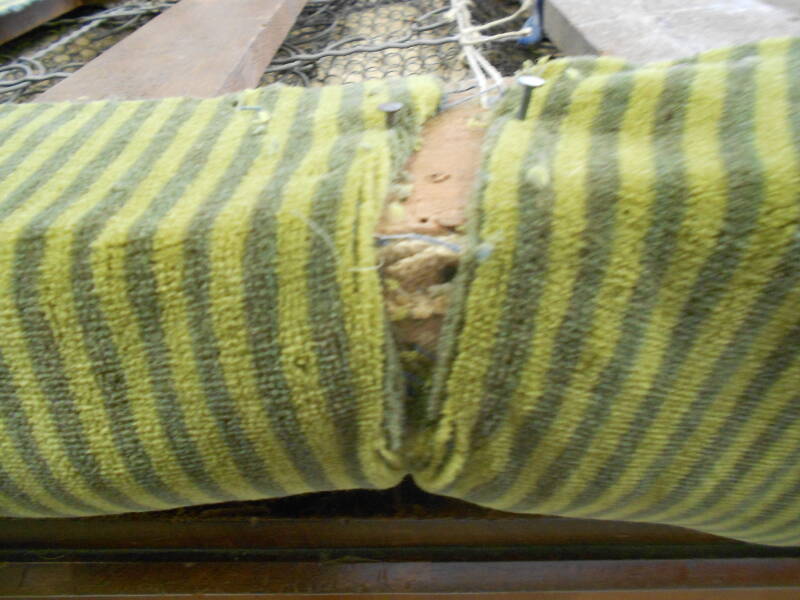
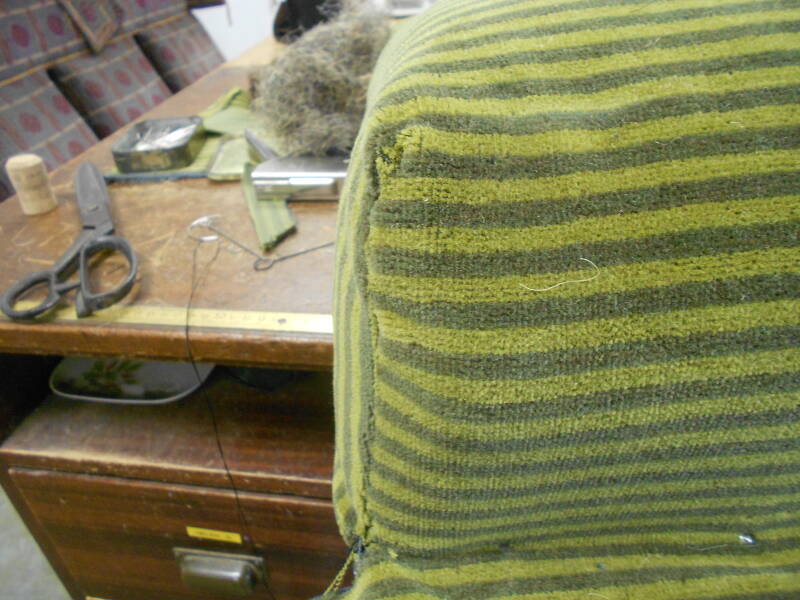
Summary of where the centre pleat meets, and corners are cut, shaped and finished by Frenching